
TESCA
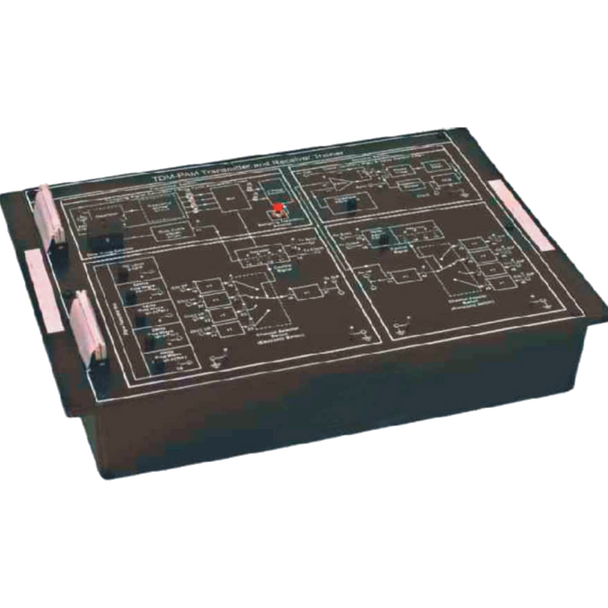
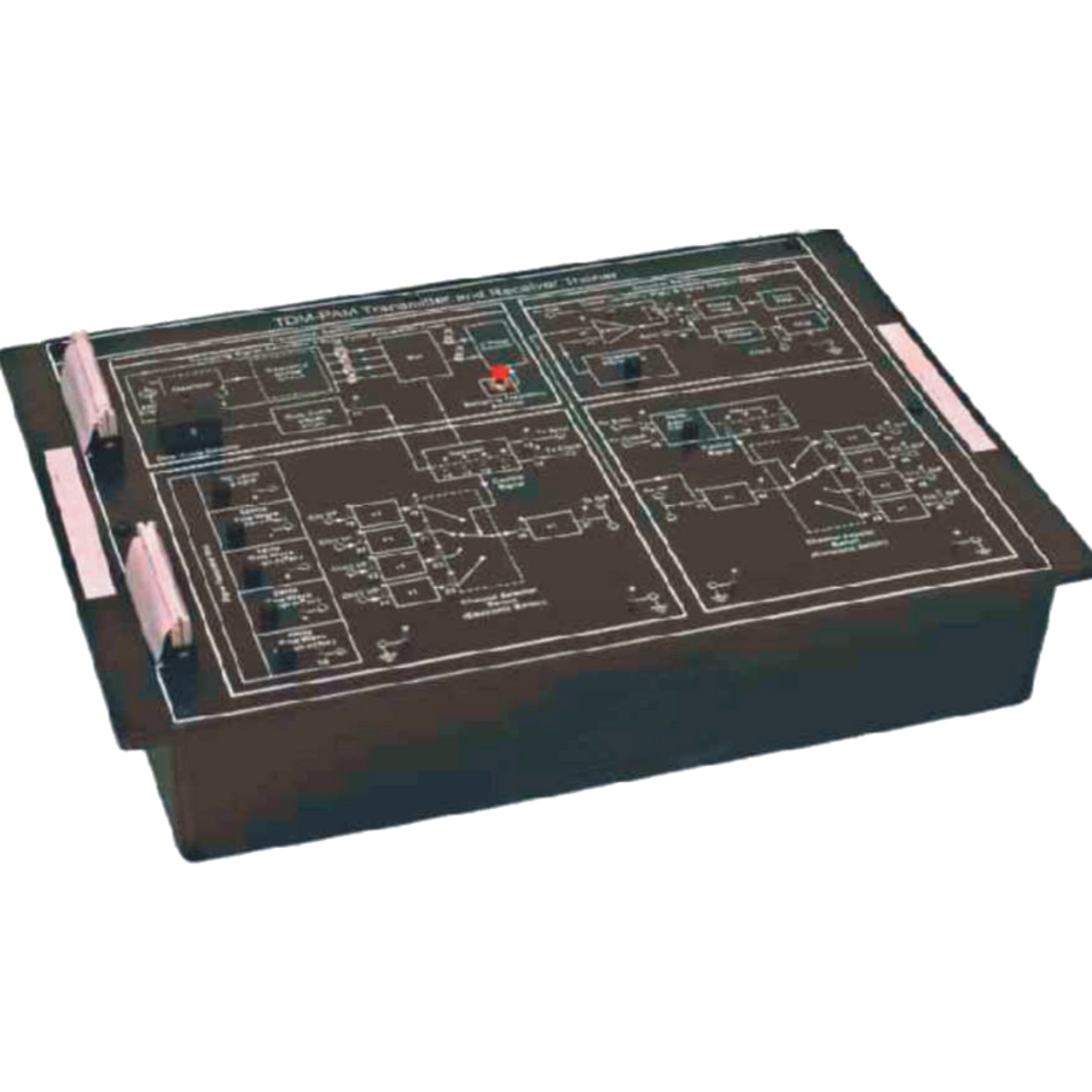
TDM Pulse Amplitude Modulation and Demodulation Trainer - Order Code 40528
(No reviews yet)
Write a Review
- SKU:
- 40528
- Shipping:
- Calculated at Checkout
Frequently bought together:
Description
Order Code: 40528
Name: TDM Pulse Amplitude Modulation and Demodulation Trainer
SPECIFICATION
The trainer provides all necessary inputs and connections for students to study Pulse Amplitude Modulation/ Demodulation techniques. Time Division Multiplexing & Demultiplexing of Signals and Signal Reconstruction.
Technical Specifications
- Crystal Frequency : 8 MHz
- Analog Input Channels : 4
- Multiplexing : Time Division Multiplexing
- Modulation : Pulse Amplitude Modulation
- On Board Analog Signal : 500 Hz, 1 KHz, 2 KHz and 4 KHz (Sine wave synchronized to sampling pulse) Adjustable amplitude and separate variable DC level)
- Sampling Rate : Four sampling signals 4 KHz / 8 KHz / 10 KHz / 20 KHz per channel (switch selectable)
- Sampling Pulse : With duty cycle variable from 0-90% in decade steps.
- Clock Regeneration at Receiver : Using PLL
- Test points : 50
- Interconnections : 2 mm Sockets
- Power Supply : 220 V ±10%, 50 Hz / 60 Hz on request
- Power Consumption : 4 VA (approx.)
- Dimensions (mm) : W 340 × D 240 × H 105
- Weight : 1.3 Kg (approx.)
- Crystal controlled clock
- On-board sine wave generator (synchronized)
- On-board pulse generator
- 4 Analog input channels sampled and time division multiplexed
- Four switch selectable sampling frequencies
- Pulse duty cycle selectable
- Internal/External sampling selectable 4 Channel De-multiplexer
- Generation of clock at receiver by PLL System
- 4th Order Butterworth L.P. Filter
Experiments that can be performed
- Pulse Amplitude Modulation technique
- Time Division Multiplexing and Demultiplexing
- PLL as Frequency Multiplier to generate clock from sync signal
- 3 modes of operation to regenerate original signal
- 3 connections between transmitter & receiver (Clock, sync & information)
- 2 connections (information, sync) Clock regenerated at receiver
- 1 connection (information only) Clock and sync derived at receiver
- Effect of varying duty cycle of Sampling Pulse on signal reconstruction
- Effect of different sampling frequencies on TDM-PAM & Demod technique
Related Products
Related Products
TDM Pulse Amplitude Modulation/Demodulation Trainer - Order Code 40612
TESCA
KES0.00
Order Code: 40612Name: TDM Pulse Amplitude Modulation/Demodulation Trainer
SPECIFICATION
Order Code-40612 is a Digital Communication Trainer Sy

TDM Pulse Code Demodulation Trainer - Order Code 40614
TESCA
KES0.00
Order Code: 40614Name: TDM Pulse Code Demodulation Trainer
SPECIFICATION
Order Code-40614 is a Digital Communication Trainer System to under st

Pulse Amplitude Modulation and Demodulation (PAM) - Order Code 40503
TESCA
KES0.00
Order Code: 40503Name: Pulse Amplitude Modulation and Demodulation (PAM)
SPECIFICATION
Experimental Training Board has been designed specifically fo

Pulse Code Modulation & Demodulation Trainer - Order Code 40512
TESCA
KES0.00
Order Code: 40512Name: Pulse Code Modulation & Demodulation Trainer
SPECIFICATION
Experimental Training Board has been designed specifical

DSB / SSB Amplitude Modulation & Demodulation Trainer - Order Code 40516
TESCA
KES0.00
Order Code: 40516Name: DSB / SSB Amplitude Modulation & Demodulation Trainer
SPECIFICATION
DSB/SSB-SC Amplitude Modulation & Demodulation Trainer has been d