
TESCA
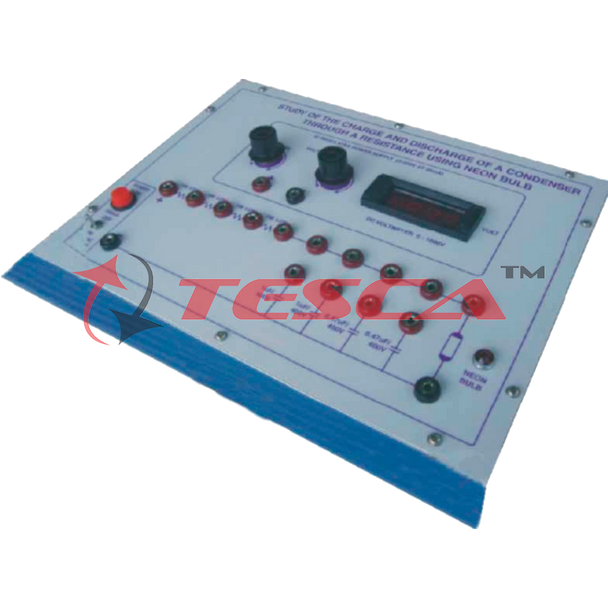
Study of the charge and discharge of condenser through a resistance using Neon Bulb with Power Supply and 1 digital meter - Order Code 36286
(No reviews yet)
Write a Review
- SKU:
- 36286
- Shipping:
- Calculated at Checkout

Frequently bought together:
Description
Order Code: 36286
Name: Study of the charge and discharge of condenser through a resistance using Neon Bulb with Power Supply and 1 digital meter
SPECIFICATION
Experimental Training Board has been designed specifically to study the Charge and Discharge of a condenser through a resistance using neon bulb.
Practical experience on this board carries great educative value for Science and Engineering Students.
Object:
Practical experience on this board carries great educative value for Science and Engineering Students.
Object:
- To study the Charge and Discharge of a condenser through a resistance using neon bulb.
- To study the dependence of the period on the source voltage and deducing striking voltage and extinction voltage of the neon bulb.
Features:
The board consists of the following built-in parts :
The board consists of the following built-in parts :
- 0-300V D.C. at 20mA, I.C. regulated continuously variable and short circuit protected Power Supply with coarse and fine voltage control.
- Digital Panel Meter (for measurement of DC voltage).
Specifications:
- Voltage Range : 0-1000 volt.
- Resolution : 1V.
- Accuracy : ± 0.2% ± 2 digit.
- Input Impedance : 10 M ohms.
- Display : 3½ digit, 7 segment LED (12.5mm height)
- Auto : Polarity indication.
- Over Load Indication : Sign of 1 on left and blanking of other digits.
- Adequate no. of Resistances and Capacitances.
- Neon bulb mounted on panel.
- Mains ON/OFF switch and Fuse.
- The unit is operative on 230V ±10% at 50Hz A.C. Mains.
- Adequate no. of patch cords stackable from rear both ends 4mm spring loaded plug length ½ metre.
- Good Quality, reliable terminal/sockets are provided at appropriate places on panel for connections/ observation of waveforms.
- Strongly supported by detailed Operating Instructions, giving details of Object, Theory, Design procedures, Report Suggestions and Book References.
Related Products
Related Products

Charging and Discharging of a Condenser with power supply and 2 multi range meters - Order Code 36183
TESCA
TZS0.00
Order Code: 36183Name: Charging and Discharging of a Condenser with power supply and 2 multi range meters
SPECIFICATION
Experimental Training Board

Study of Diode Detector with power supply and 1 Meters - Order Code 36251
TESCA
TZS0.00
Order Code: 36251Name: Study of Diode Detector with power supply and 1 Meters
SPECIFICATION
Experimental Training Board has been designed spec

Study of Diode Clipping Circuits with power supply and 1 meters - Order Code 36211
TESCA
TZS0.00
Order Code: 36211Name: Study of Diode Clipping Circuits with power supply and 1 meters
SPECIFICATION
Experimental Training Board has been desi

Study of Varactor Diode Characteristics with power supply and 1 meters - Order Code 36249
TESCA
TZS0.00
Order Code: 36249Name: Study of Varactor Diode Characteristics with power supply and 1 meters
SPECIFICATION
Experimental Training Board has been des

Study of Recovery Time of Diodes with power supply and 1 meter - Order Code 36256
TESCA
TZS0.00
Order Code: 36256Name: Study of Recovery Time of Diodes with power supply and 1 meter
SPECIFICATION
Experimental Training Board has been desig